
The official FIFA World Cup 2026 fantasy game has arrived, and its launch with Aramco gives fans a fresh way to engage with the tournament before a ball is kicked. Players can assemble a 15-man roster of international stars, then climb the global, continental, and country-based rankings as the competition unfolds.
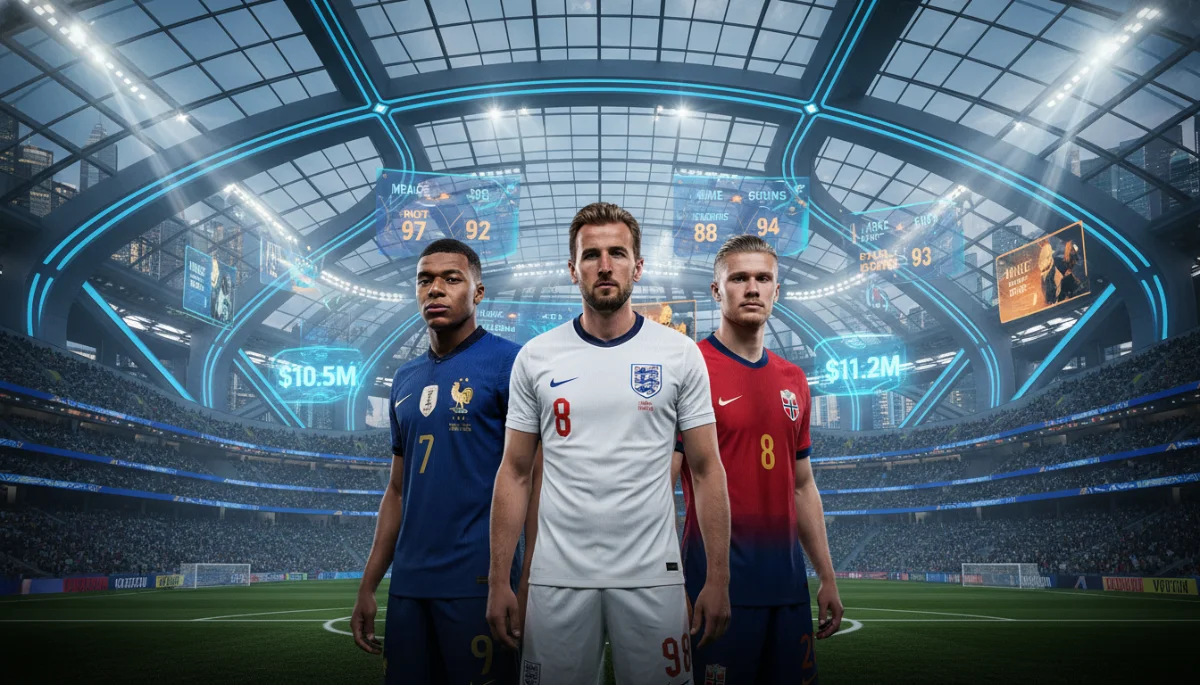
Early interest is already centered on marquee names such as Kylian Mbappe, Harry Kane, and Erling Haaland, all of whom are expected to attract heavy ownership from managers looking for immediate firepower.

How the Game Is Built
The format rewards planning as much as star power. Managers have a fixed budget, a position-based roster requirement, and a series of tournament-specific rules that change as FIFA’s expanded field moves from group play into the knockout rounds.
- Roster size: Each squad must include 15 players, split into 2 goalkeepers, 5 defenders, 5 midfielders, and 3 forwards.
- Starting budget: Teams begin with $100 million, and that pool expands by $5 million when the knockout stage begins.
- Fixed pricing: Player prices do not rise or fall during the competition, so the first valuation choices matter from day one.
- Country limits: In the group stage, managers may select no more than three players from one nation.
- Transfer rules: Unlimited changes are available before the opening match on Thursday, 11 June, and again before the Round of 32.
- Matchday management: Bench moves and captain changes can be made during active Matchdays to improve output.
- Special chips: Available boosters include Wildcard, 12th Man, Maximum Captain, Qualification Booster, and a Mystery Booster that will be revealed before the Round of 32.
How Points Are Earned
Scoring is tied to real match events, which means managers need more than goalscorers. Defensive actions, discipline, and overall involvement all influence the final total.
- Minutes played
- Goals scored and goals conceded
- Assists
- Cards and own goals
- Penalties won or conceded
- Tackles, chances created, and shots on target
There are also bonus routes to extra points. Direct free-kick goals receive added value, while a scouting bonus is available when a player owned by fewer than 5% of managers scores more than four points in a match.
Top-End Prices and Market Pressure
The $100 million cap will force difficult decisions, especially because the most expensive attackers absorb a huge share of the budget. Haaland, Kane, and Mbappe sit at the top of the pricing ladder at $10.5 million each, with Lionel Messi and Cristiano Ronaldo just behind them at $10 million apiece.
Defensive and goalkeeping choices are also shaped by elite reputations. Nuno Mendes stands as the priciest defender at $5.8 million, while the premium goalkeeping group includes Ederson, Alisson Becker, David Raya, and Unai Simon.
The market closely mirrors the FIFA/Coca-Cola Men’s World Ranking, with the strongest nations dominating the upper price bands. Of the 25 most expensive players in the game, 20 come from the top six ranked countries, and England plus France each account for five of those premium selections.
Historical note: Kylian Mbappé won the adidas Golden Boot at the FIFA World Cup Qatar 2022™. The award began as the Golden Shoe in 1982, then took its current name in 2010 to recognize the tournament’s top scorer, with silver and bronze versions also awarded.
Value Beyond Europe
The new Confederation Challenge Leaderboard adds another layer of strategy by measuring how user selections perform across different regions. That makes it important to identify strong options outside the traditional European core.
- Africa: Mohamed Salah at $10 million and Omar Marmoush at $7.8 million headline the region.
- Asia: Son Heungmin is priced at $7.4 million, while Salem Al Dawsari follows at $7.2 million.
- North America host nations: Jonathan David, Raul Jimenez, and Christian Pulisic are each listed at $7 million.
- Oceania: Chris Wood is New Zealand’s top-priced option at $6.5 million.
That regional spread matters because the game is not only about individual output. It also rewards managers who can balance safe, expensive names with lower-cost players from confederations that may be overlooked by the wider field.
What Smart Managers Will Watch
The most successful squads will likely be built around timing and balance rather than name recognition alone. Because prices stay fixed, early value judgments become more important than in fantasy formats where the market moves during the season.
Managers will also need to think ahead to the knockout phase, where the budget increases and transfer windows open up new possibilities. That means a roster that looks strong for the group stage may need to be reshaped later to keep pace with the changing tournament landscape.


Leave a Reply