
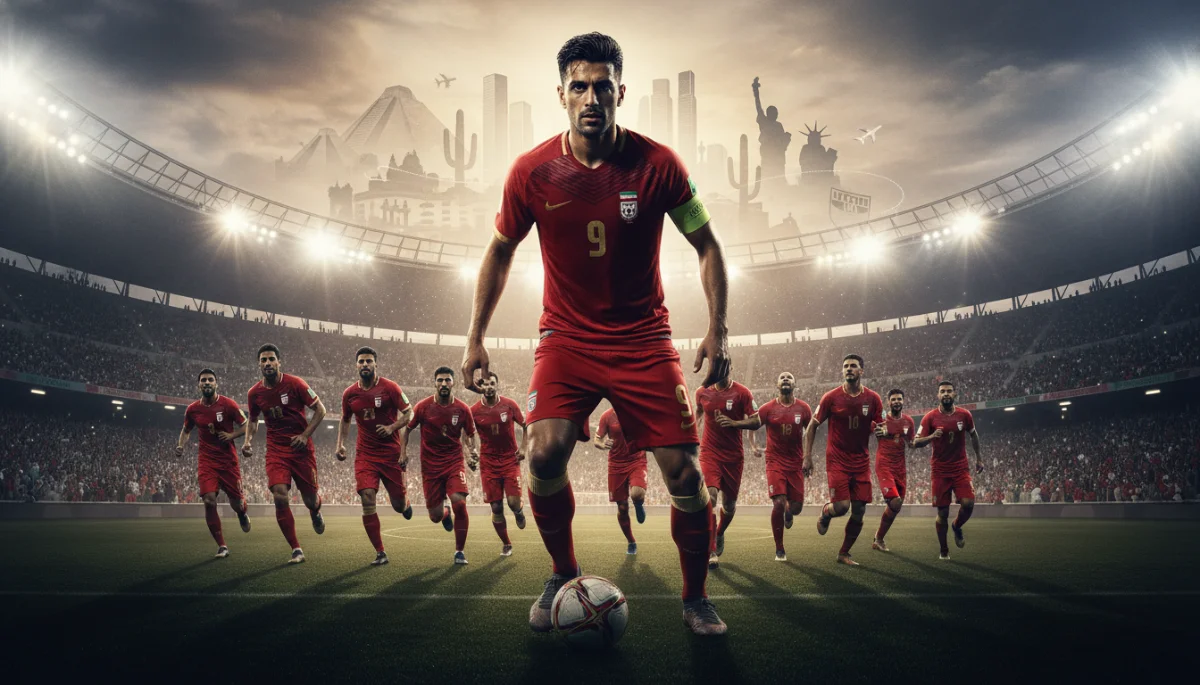
Iran enters the 2026 FIFA World Cup with a familiar profile: disciplined, experienced, and determined to finally move beyond the group stage. The team has reached the tournament again and now faces both a manageable draw and unusual travel complications as the finals approach.
Iran’s Tournament Status
Iran is confirmed for the 2026 World Cup, and the main pre-tournament story has been logistical rather than sporting. A visa dispute involving the United States created uncertainty around the team’s base, but FIFA approved a plan that places Iran in Tijuana, Mexico, with match-day travel into the United States. That setup allows Team Melli to keep its schedule intact while avoiding a full-time stay on American soil.
The arrangement matters because Iran’s three group matches are all scheduled in the United States, and the team has already shifted its preparations to Turkey before heading to North America. For the federation, the priority is clear: keep the squad comfortable, reduce distractions, and preserve focus on the football itself.
Group G in One View
The draw placed Iran in Group G with Belgium, Egypt, and New Zealand. On paper, that is a competitive but workable section, especially when compared with some of the tournament’s heavier groups. It gives Iran a realistic opening to chase qualification, even if one opponent stands above the others in reputation and depth.
| Opponent | General outlook | Why it matters for Iran |
|---|---|---|
| New Zealand | Most approachable fixture | Likely the best chance to open with points |
| Belgium | Strongest technical challenge | Could decide Iran’s ceiling in the group |
| Egypt | High-pressure middle ground | May shape the race for second place |
Belgium bring pedigree and quality, Egypt arrive with a reputation for tactical toughness, and New Zealand are the side Iran will most likely target for an early win. Because the tournament format is expanded, even a third-place finish may still offer a route forward, but Iran will be aiming higher than that.
Fixture Outlook
Iran’s schedule is front-loaded with opportunity. The opening match against New Zealand in Los Angeles is the clearest chance to collect three points and settle nerves early. The second game, also in Los Angeles, brings Belgium into the picture and is likely to be the most difficult test of the group phase. The final fixture against Egypt in Seattle could become the decisive match, especially if the group remains tightly packed.
The West Coast layout is helpful from a practical standpoint. With two games in Los Angeles, Iran can establish a temporary rhythm instead of jumping across the continent. That small advantage may matter in a short tournament where recovery time and routine can influence performance as much as tactics do.
Leadership, Experience, and Key Names
Amir Ghalenoei continues to guide the side from the bench, bringing stability and a long track record in Iranian football. Since returning in 2023, he has overseen a qualifying run that was notably strong, with Iran losing only once in AFC play and finishing well ahead of its rivals.
The squad’s most important attacking figure remains captain Mehdi Taremi, whose club experience in Europe gives Iran a proven reference point in the final third. Around him, the team leans on established contributors such as Saman Ghoddos and goalkeeper Alireza Beiranvand. That mix of international experience and domestic familiarity has often been one of Iran’s biggest strengths, and it gives Ghalenoei a dependable core.
What stands out most is balance. Iran does not need to reinvent itself to be competitive. It needs organization, patience, and enough sharpness in key moments to punish mistakes. That has been the formula for much of its recent success, and it is likely to remain the same in 2026.
How the Team Shapes Up
Iran enters the tournament with real ambition, not just participation. The country has qualified repeatedly, but the group stage has always been a barrier, and that history adds pressure to an otherwise promising setup. This time, the draw is fair, the squad is settled, and the coach has had time to build continuity.
There is still uncertainty around travel and the broader political backdrop, yet the sporting picture is encouraging. If Iran starts well against New Zealand and stays composed against Egypt, the path to the knockout rounds becomes very real. A result against Belgium would be a bonus, but even without that, Iran has a credible chance to keep the campaign alive into the final matchday.
For supporters following the team closely, updates on fixtures, results, and tournament developments will remain central as kickoff approaches. Iran’s challenge is straightforward to describe and difficult to achieve: turn consistency into a breakthrough and make 2026 the year Team Melli finally changes its World Cup story.



Leave a Reply